


For a long time, livestock farming has been the primary source of livelihood for residents of Wajir County. Considered the livestock capital of Kenya, the county is among the leading sources of beef sold in the country. It is well known for its vibrant market for goats, sheep, cows, and camels.
Sadly, prolonged drought in the region is now threatening this once-lucrative venture for the predominantly pastoral communities. Persistent drought occasioned by climate change has periodically killed their livestock, and now locals are turning to agriculture as an alternative.
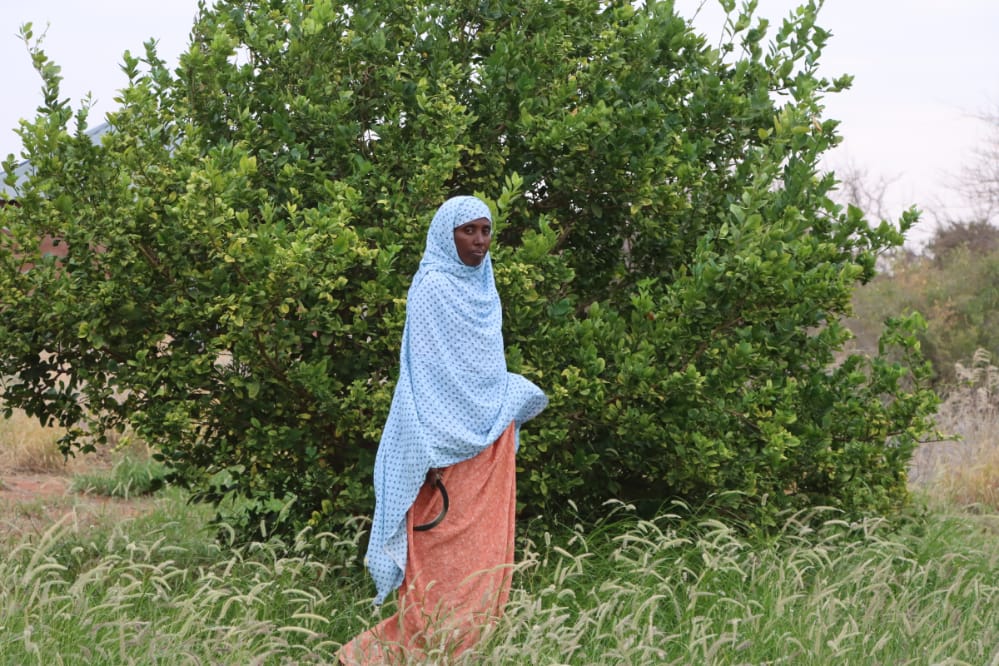
Until recently, Ethoy Osman had been solely depending on livestock keeping as an economic activity. For over twenty-five years, the mother of seven– three girls and four boys moved steadfastly from one area to another in search of water and greener pastures for her stock.
Water has long been a cause for concern for residents of Wajir County, with frequent droughts affecting not only the residents but also their animals. The situation has forced locals to continuously move with their herds in search of this scarce resource, resulting in conflicts with fellow pastoralists.
Wajir is an arid region with plains prone to seasonal flooding and seasonal swamps. The rainfall is measured at an estimated 240mm annually. The vast majority of the semi-arid land is only suitable for grazing livestock.
The perennial clan clashes between pastoralists, unpredictable climate changes, drought, and famine often kept Ethoy awake at night, and she knew something had to change.
“I kept worrying about my safety whenever the clashes erupted as I moved in search of water and pastures. Sometimes I had to travel over 40 kilometres, and there are days I was really terrified,” she explained.
But perhaps the last straw for Ethoy was the drought that almost wiped out all her livestock. Luckily, her husband of thirteen years has always been supportive of her. So when she informed him of her decision to sell their livestock that survived the drought to purchase a piece of land and begin crop farming, he took it in his stride.
“The drought destroyed all our animals, except for a few. We had to think outside the box, so we sold the remaining animals and bought a parcel of land with the proceeds. The money was enough for me to settle my family in our new home and start farming after many years of pastoralism,” she continued.
Together they now grow spinach, lemons, watermelons, grass, and pawpaw fruits on their farm. She sells the produce and uses the profit to feed her family and educate their children.
She invited us to her farm, and despite the extreme weather conditions, she is able to grow her crops using water from a borehole sunk in the heart of her farm.
She takes the produce to the market every day. Initially, Ethoy says, “the market was favourable before the Covid 19 pandemic.” She could sell her vegetables and earn more than 10,000 shillings per day. After the pandemic, the market became unpredictable but is now picking up, albeit slowly.
Ethoy also grows grass to sell as animal feed and saves some to sell during drier periods, allowing her to maximize profits when demand is high.
Wajir CEC (County Executive Committee) for Agriculture Mr Yussuf Gedi has lauded women such as Ethoy for the role they play in the economy of the county.
“Women here are really emerging as successful entrepreneurs. They are now the sole breadwinners, and whatever profit they make, they use to build their families”, says Gedi.
We provide them with training on crop farming, storing perishable goods in these extreme weather conditions and bookkeeping, says Yussuf.
Like Ethoy, many residents have embraced agriculture in the region, and this is quickly changing the face of Wajir county.
By Jamal Mohumed