

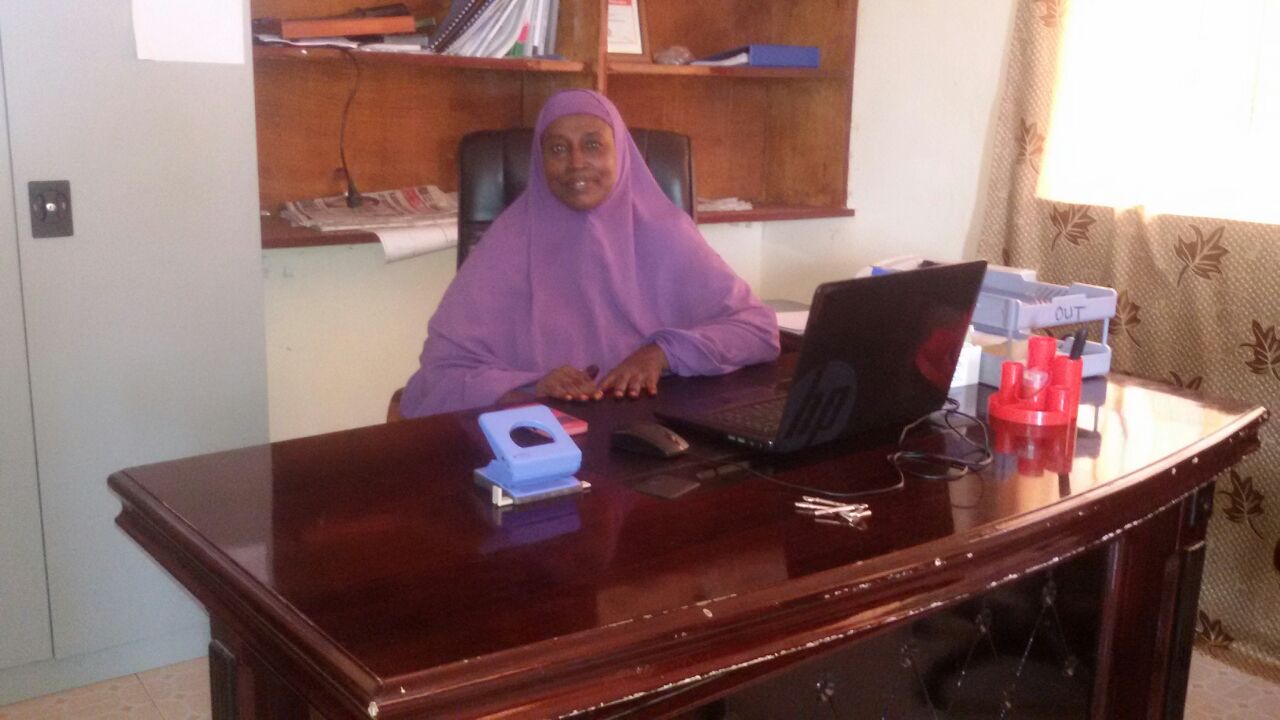
In a society where the primary role of women is mainly domestic and men are the sole breadwinners of the family, Oray Adan has defied the odds by emerging as a role model for many in Wajir County. As a trained teacher she has proved that women have a key role to play in a society that is male dominated.
Oray graduated from Igoji teachers college in 1983 and was posted to Bute town in Wajir County. She joined a staff of few women who started an organization called ‘Wajir Women Association for Peace’ which was hailed as the defining factor in ending the inter-clan clashes in Wajir in the 1990’s.
“We were four women, living in Wajir, who took the first steps. We were all working then in other jobs, as community development workers, secretaries, and teachers.”- Oray
“Our movement for peace started in 1993. We were four women, living in Wajir, who took the first steps. We were all working then in other jobs, as community development workers, secretaries, and teachers.” Oray said.
However, conflict triggered by the scarcity of resources erupted between clans living in Wajir County. Nomadic pastoralist in the region experienced a major drought in 1991-92 and lost 80% of their livestock. This left all the three major clans in Wajir namely Degodia, Ajuran and Ogaden scrambling for the few remaining greener pastures. Moreover, the 1992 elections changed the political balance in the district and added to the already growing animosity in the region.
Furthermore, the arrival of Somali and Ethiopian refugees with arms and the presence of soldiers intensified an already devastating territory. As a result, by mid-1993 no part of Wajir was safe and the violence was escalated.
Even though women are not represented much in political decision-making, their role in Somali society is very important. One of the key pillars of any community is communication among its members especially during crisis.
The late Deka Ibrahim, a colleague of Oray Adan and one of the pioneers of the NGO realized the situation was deteriorating. For example, women were involved in disputes with some refusing to sell their products to those from other clans at Market places.
Therefore, in 1993 Oray and her colleagues created a committee to address the situation dubbed ‘the Women Association for Peace’. The concept of those peace meetings was to sit down together and talk about how they could solve the problem.
The challenge though was that the idea was at the early stage and none of the members had prior experience. They had to overstep cultural norms to make a breakthrough.
“At the start, everything we had would come from us, from our salaries and all sorts of contributions such as water, plates, tables, anything we needed, and we found it somewhere.
“I realized afterwards that, that was part of the reason for our credibility. We had no idea how to organize, what the NGO world represented. We worked from our homes. But this gave us an authentic base, and we gained both credibility and legitimacy for our mandate” explained Oray.
They started the mediation process along the lines that were quite familiar to them by using culture and tradition. The process involved a lot of traveling from group to group, trying to start a dialogue through talking and building confidence. After establishing public goodwill, they would allow the minority groups to take the lead in the dialogue. Before long, the movement had many followers; from youth to elders. As a result, peace messages were relayed at every home.
By 1995, The Wajir Peace and Development Committee was formed, which brought together Parliamentarians, Humanitarian workers and other groups and became part of the district Security Committee. They set up rapid response teams including elders, religious leaders and security officers who intervened whenever a problem occurred in the region.
The Wajir peace group started to engage with other groups, including young people. The Wajir district being underdeveloped compared to the other regions of Kenya, unemployment among the youth was very high. Due to this, young people were used for violence. The Youth for peace group created social activities in order to prevent young people from turning to violence and participating in crimes.
Soon other similar projects followed and the violence was collectively impeded. Sanity was regained and what was once efforts from a few women turned out to be the most celebrated efforts.
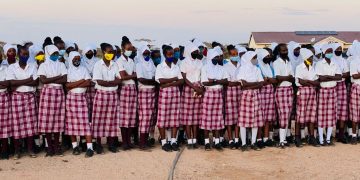
A year later, Oray resigned from her job and started her own school; Iqra Elite Junior Academy in Wajir that opened doors to over 500 pupils providing them with affordable school fees and quality education.
Oray shared with iwomantoday, that traditional Somalis have a notion against educating the girl child. She believes society will benefit greater when women are educated and empowered because they are more knowledgeable and understanding.
“I narrate my own story to girls to encourage them that they are destined for greatness and counsel them when they fail”- Oray
“I narrate my own story to girls to encourage them that they are destined for greatness and counsel them when they fail” Oray said during the interview.
Sadly though in the year 2003, came the lowest point of Oray’s life when her husband and the father of her children Abdisalan Yusuf passed on.
“The ordeal shredded my life to pieces; I struggled to move on as a single mother and as a widow’ ‘But then I looked back, where we came from. With all the challenges we’ve faced. It kept me strong” She noted.
Oray Adan toured the world as an observer, humanitarian, educationist and a champion of women’s empowerment which she says helped her do wonders back at home.
Despite losing the Women MP seat in Wajir County in 2013, she is still remembered as a person who fought for peace and reconciliation in her community. She one day aspires to open a University for girls so as to curb the prevailing discriminations against girls and women with the hope of creating equal opportunities.
Written by: Ahmed Hussein
Freelance Journalist at Iwomantoday
Edited By: Fatma Adam